One of the most common questions Melbourne business owners and office managers ask is simple: how often does my office actually need to be professionally cleaned? It sounds like it should have a simple answer — but the truth is, it depends on several factors that are unique to your business.
Clean too infrequently, and you risk spreading illness among your team, creating a poor impression on clients and falling behind on WHS hygiene obligations. Clean too often and you are wasting budget you could reinvest elsewhere. In this guide, we break down the recommended cleaning frequency for Melbourne offices of every size and type — so you can make an informed, cost-effective decision.
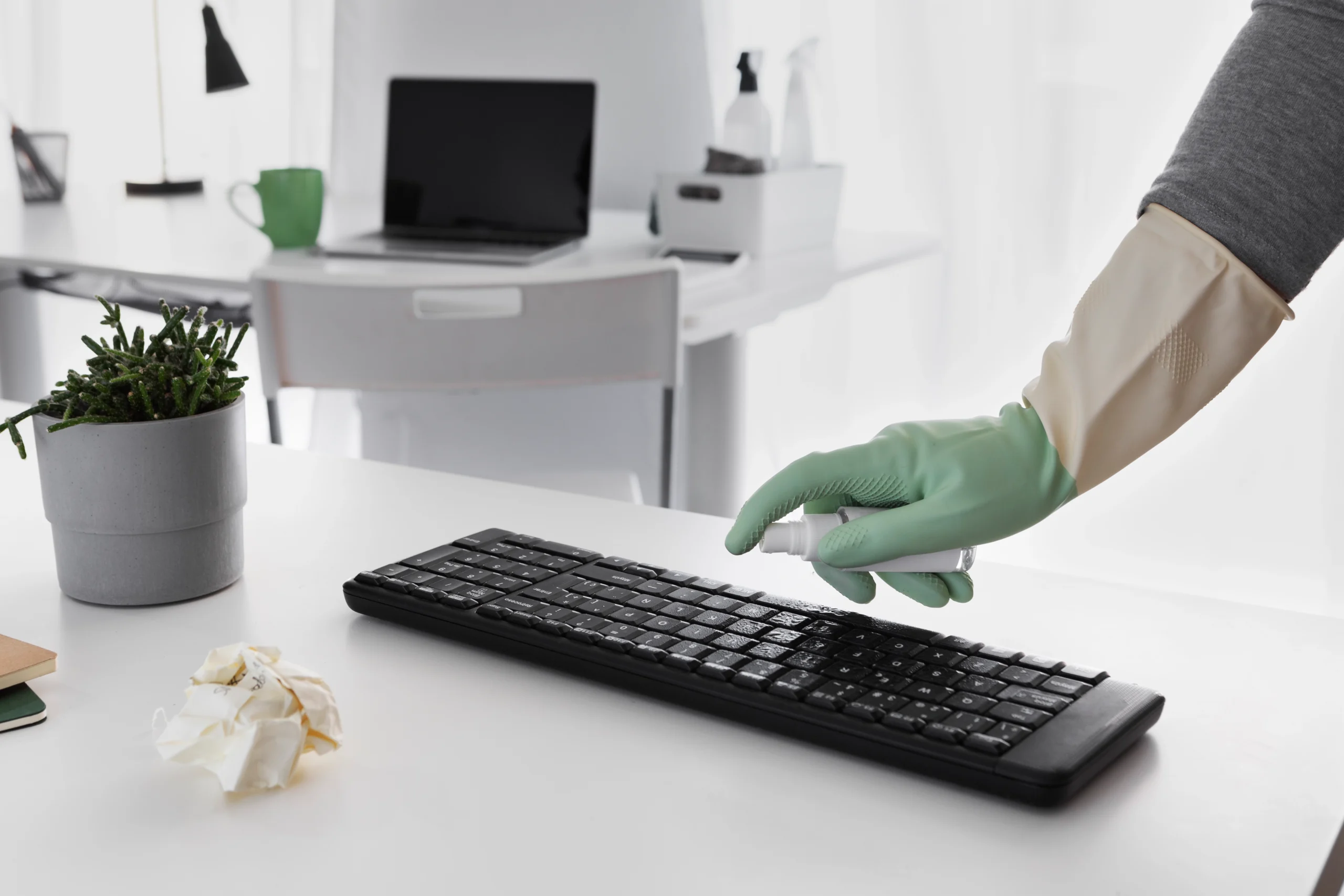
📊 Research by the American Journal of Infection Control found that bacteria on office surfaces — keyboards, phones and door handles — can spread to 50% of workers within just four hours in an unclean environment. Regular professional cleaning directly reduces absenteeism.
Why Cleaning Frequency Matters More Than You Think
It is easy to underestimate the impact a clean or dirty office has on your business outcomes. Beyond the obvious aesthetic, here is what the research and real-world experience consistently show:
- Employees in professionally cleaned offices report up to 15% higher productivity than those in neglected ones
- Poor office hygiene is one of the top three reasons employees report feeling undervalued by their employer
- Visitors and clients form a lasting impression of your professionalism within 7 seconds of entering your premises
- In Victoria, employers have a legal duty under the Occupational Health and Safety Act 2004 to maintain a safe and hygienic workplace
The General Rule: What Most Melbourne Offices Need
As a starting point, here is the industry standard guidance for commercial office cleaning frequency in Melbourne:
| Office Size / Type | Recommended Frequency | What’s Typically Included |
|---|---|---|
| Small office (1–10 staff) | 2–3 times per week | Floors, surfaces, bathrooms, bins, kitchen |
| Medium office (10–50 staff) | 3–5 times per week | All of the above + meeting rooms, reception |
| Large office (50+ staff) | Daily (5 days) | Full daily clean + periodic deep cleans |
| High-traffic / public-facing | Daily or twice daily | Continuous sanitisation of touchpoints |
| Medical / healthcare office | Daily (mandatory) | TGA-approved disinfection, clinical protocols |
Factors That Should Influence Your Cleaning Schedule
1. The Nature of Your Business
A law firm with 6 lawyers who work quietly at desks has very different cleaning needs to a real estate office with 30 agents, a busy reception desk and constant client foot traffic. Industries dealing with food, healthcare or vulnerable populations typically require daily professional cleaning as a minimum, often with specific hygiene protocols mandated by industry regulators.
2. Team Size and Office Density
More people = more bacteria, more waste, more mess. Open-plan offices with hot-desking arrangements need more frequent attention than private offices with dedicated workstations, as shared surfaces accumulate contamination more rapidly.
3. Melbourne’s Seasonal Considerations
During Melbourne’s flu season (typically May–September), increasing your cleaning frequency by at least one additional session per week — with a focus on high-touch surfaces like door handles, lift buttons, kitchen taps and shared equipment — can meaningfully reduce transmission in your workplace.
4. The Role of In-House Cleaning vs Professional Cleaning
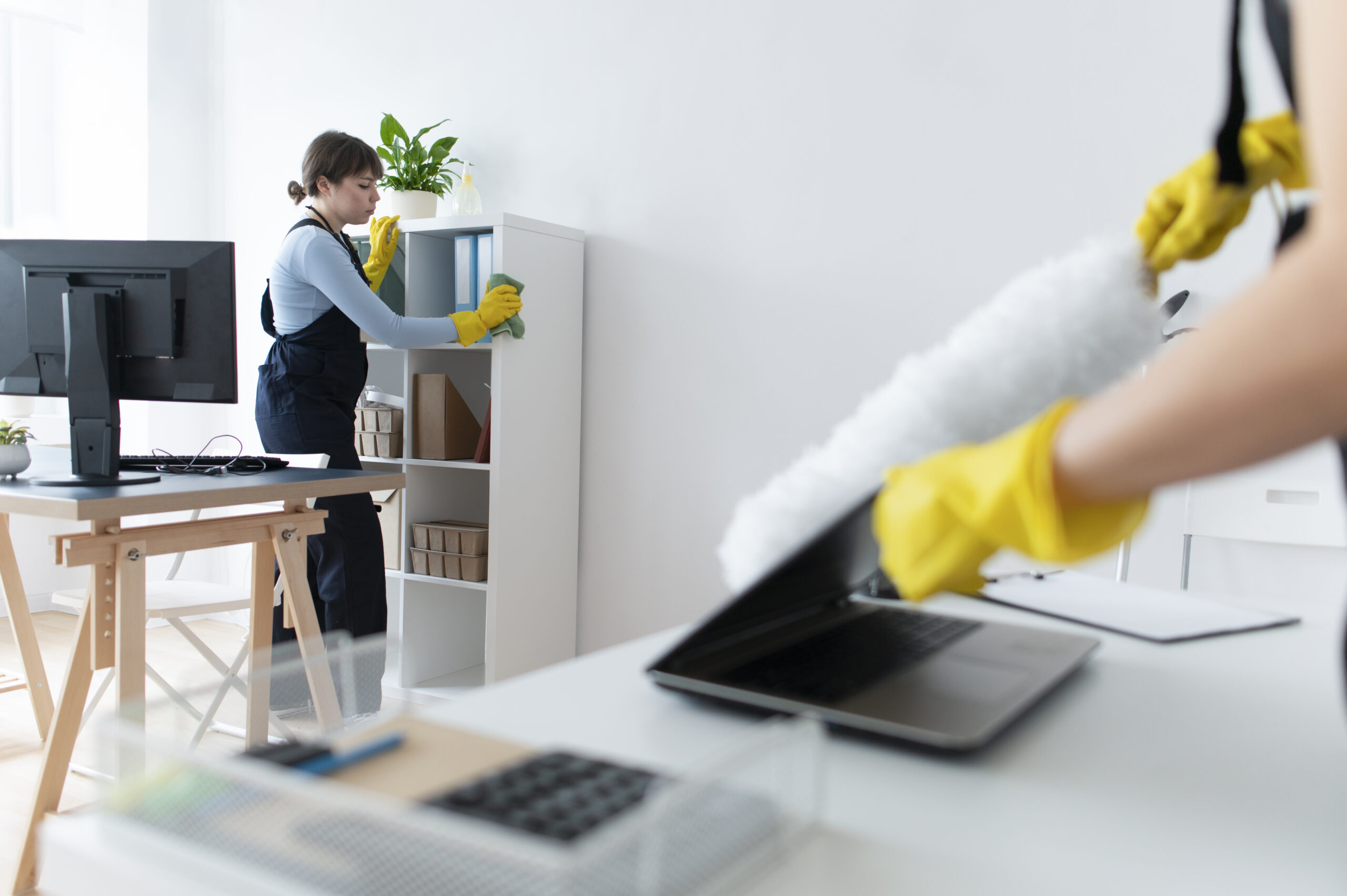
Many businesses rely on a combination: staff keeping their own areas tidy day-to-day, with a professional commercial cleaning service handling deeper, more thorough cleans on a scheduled basis. This is usually the most cost-effective model for small and medium businesses in Melbourne.
Pro tip: The most cost-effective approach for most Melbourne SMEs is 3 professional cleans per week + a monthly deep clean. This covers daily hygiene needs while keeping carpets, high-level surfaces and hard-to-reach areas in top condition without an unnecessarily large cleaning budget.
What Should Be Cleaned at Each Visit?
STANDARD OFFICE CLEANING CHECKLIST (PER VISIT)
- Vacuum and mop all floor surfaces including under desks
- Wipe and sanitise all desks, benchtops and common surfaces
- Clean and disinfect bathrooms — toilets, basins, mirrors, floors
- Clean kitchen / breakroom — benches, sink, appliances, fridge exterior
- Empty and reline all bins
- Clean entrance, reception area and glass partitions
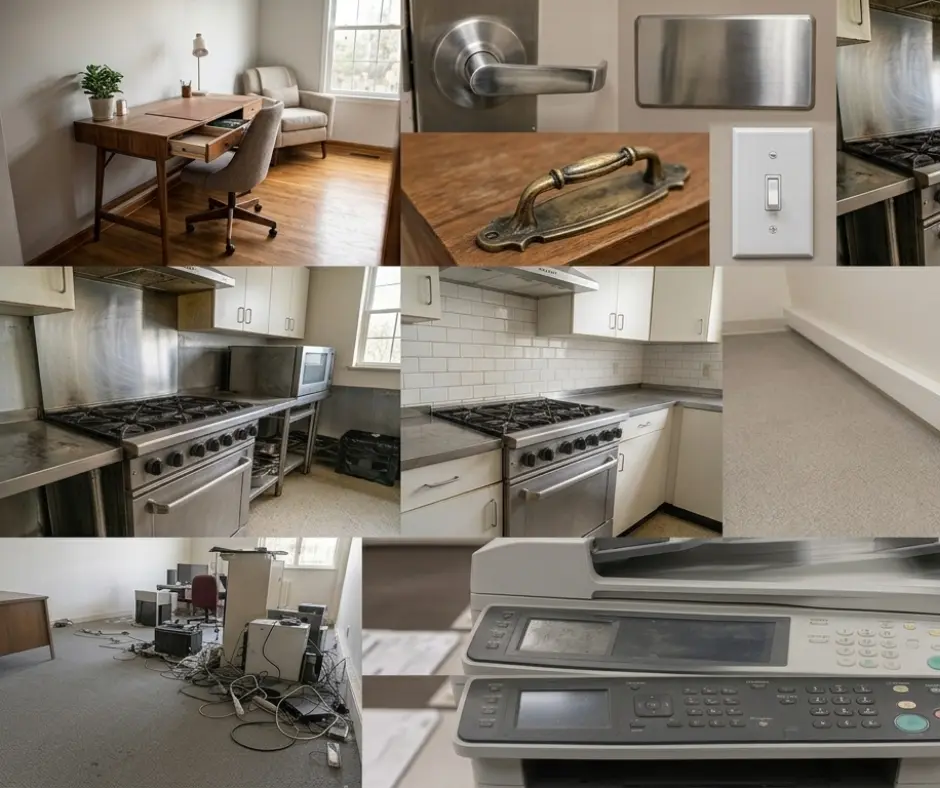
- Sanitise high-touch points: door handles, switches, lift buttons
- Dust skirting boards, window sills and accessible shelving
When Is a Deep Clean Needed?
Beyond your regular schedule, there are key moments when a professional deep clean is essential:
- Moving into a new office space or after a fit-out
- After any office renovation or construction work
- Post-outbreak of illness in the workplace
- At the end of each quarter as a maintenance reset
- Before a major client visit, investor presentation or office event
- When taking on a new commercial lease
How Much Does Regular Office Cleaning Cost in Melbourne?
For Melbourne businesses budgeting for a professional cleaning service, here are realistic 2025 cost estimates based on space size and frequency:
| Office Size | Frequency | Estimated Monthly Cost |
|---|---|---|
| Under 100 sqm | 3× per week | $400–$650/month |
| 100–300 sqm | 3–5× per week | $650–$1,200/month |
| 300–600 sqm | 5× per week | $1,200–$2,200/month |
| 600+ sqm | Daily + deep cleans | $2,200–$4,500+/month |
Not Sure What Frequency Is Right for Your Melbourne Office?
Boost Commercial Cleaning offers free, no-obligation site assessments across Melbourne. We visit your space, understand your needs and give you an honest recommendation — no pressure, no upselling.
Book Your Free Assessment →Serving all Melbourne suburbs • Respond within 2 business hours
Frequently Asked Questions
What is the minimum recommended cleaning frequency for a Melbourne office?
For most offices, a minimum of two to three professional cleans per week is recommended. This covers essential hygiene for bathrooms, kitchens, floors and surfaces without over-servicing. Higher-frequency is needed for larger or high-traffic spaces.
Should I increase cleaning frequency in winter?
Yes. Melbourne’s winter months (May–August) coincide with peak flu and cold season. Adding one extra clean per week, with a focus on sanitising door handles, keyboards, phones and shared equipment, can meaningfully reduce sick day rates in your team.
Can I mix professional cleaning with in-house tidying?
Absolutely — and most Melbourne businesses do. Professional cleaners handle the deep work: floors, bathrooms, kitchen, vacuuming and surface sanitisation. Staff can maintain their own desk areas day-to-day. This hybrid approach is the most cost-effective for most SMEs.
How do I know if my office isn’t being cleaned frequently enough?
Key signs include visible dust build-up, persistent odours, stained or dingy carpets, bathroom hygiene complaints from staff, increased sick days, or a general feeling that the space “never feels quite clean.” If any of these apply, it is time to review your schedule.